
15 Ways to Fail at Beverage
I usually charge for this
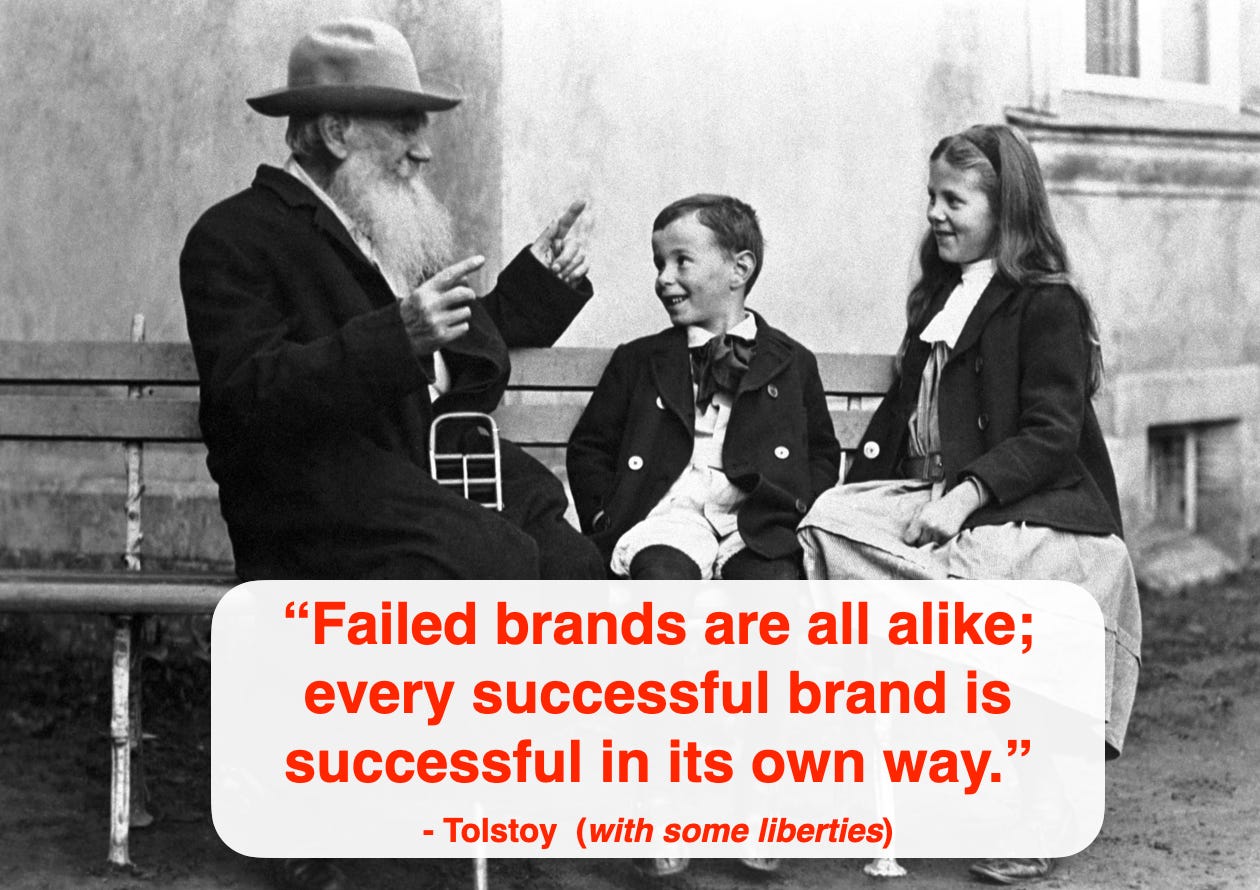
While breakout brands find unique ways to win, failed drinks startups repeat the exact same errors.1
Here are the 15 mistakes beverage startups make again and again:
Brand
1️⃣ Assuming taste is a moat: Great liquid is just the cost of entry, not a differentiator.
2️⃣ Confusing aesthetics with efficacy: One must understand that “good-looking” packaging does not equal good packaging.
3️⃣ Conflating appearance with brand: A brand is just a commodity with emotional appeal. A cool font on your label doesn’t do this heavy lifting.
4️⃣ Overvaluing IP: Your brand’s “cool” name, label, bottle, and website absent of sales is worth nothing.
5️⃣ Assuming versatility is an advantage: Leave versatility to products like duct tape and vinegar. Your brand needs to be dialed in when it comes to signature serve and occasion.
Sales and Distribution
6️⃣ Confusing distribution with brand-building: Getting on shelves isn’t the same as moving off them.
7️⃣ Chasing doors over velocity: Expanding your footprint before proving you can rotate off the shelf.
8️⃣ Neglecting execution because “the brand is killer”: A brand identity cannot rescue a broken supply chain or a sales team chasing a missing commercial value proposition.
9️⃣ Targeting “everyone” too early: Focus on a tight, passionate niche before attempting mass-market scale.
🔟 Ignoring trade spend: Underestimating the crushing cost of advertising and promotion (A&P).
Growth
1️⃣1️⃣ Underestimating cash conversion cycles: Paying for production months before retail buyers actually pay you.
1️⃣2️⃣ Hiring pedigree or experience over capability: Corporate resumes can sometimes clash with gritty, early-stage startup chaos.
1️⃣3️⃣ Failing to creating supply chain redundancy: Having only one co-packer means a single point of failure (or a mere delay) can capsize your inventory.
1️⃣4️⃣ Failure to benchmark: Not measuring your retail performance against hard, objective industry standards.
1️⃣5️⃣ Too many SKUs: One winning flavor beats five or six (that eat up capital, distract the sales team from what matters, and confuse consumers via the paradox of choice).2
It is worth noting that all these mistakes tend to boil down to the same recurring biases and errors in logic: overconfidence, endowment effect, failure to focus, principle of least effort (assumption and laziness), conflation, and egocentrism. You can read about most of these and others in Charlie Munger’s lengthy treatise, “The Psychology of Human Misjudgment.”
More on this next post.