
On Priority and Focus
The fewer priorities, the better
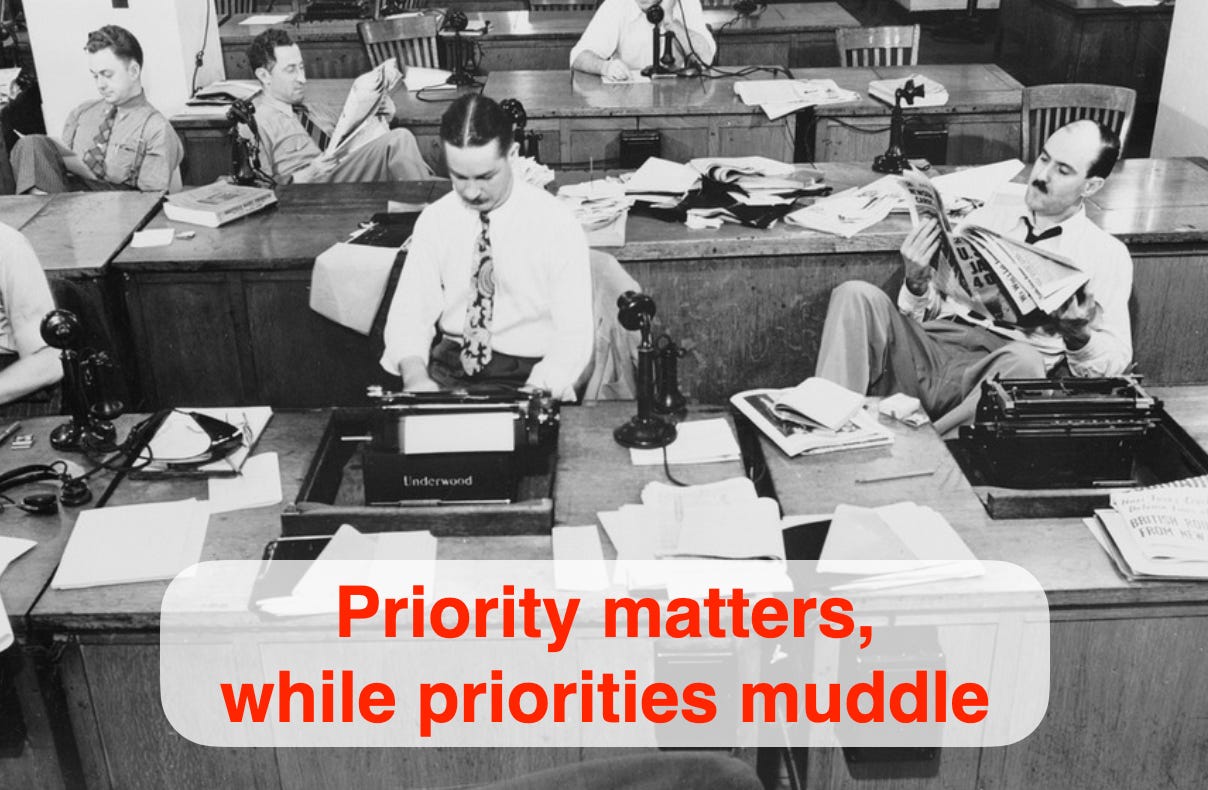
For the first 500 years of its existence, “priority” was only singular; it meant THE “first thing.”
It wasn’t until the 1900s the word became pluralized.1 With “priorities” elevating the 2nd, 3rd, 4th and 5th most important things to the same level as the 1st, the power of the concept became diminished.
“Priorities” result in diluted focus and cognitive overload.
When everything’s a priority, nothing gets the deep attention it deserves.
To build a remarkable drink brand, you need singular clarity. Identify your true north, that one dominant priority, and ruthlessly pursue it.
So how to approach this?
In their book Rework, Jason Fried and David Heinemeier Hansson propose an elegant solution :
Don’t prioritize with numbers or labels. Avoid saying, “This is high priority, this is low priority.” Likewise, don’t say, “This is a three, this is a two, this is a one, this is a three,” etc. Do that and you’ll almost always end up with a ton of really high-priority things. That’s not really prioritizing.
Instead, prioritize visually. Put the most important thing at the top. When you’re done with that, the next thing on the list becomes the next most important thing. That way you’ll only have a single next most important thing to do at a time. And that’s enough.
A nod to Greg McKeown and his book Essentialism for calling my attention to this incredible etymological fact.
“Prioritize” didn’t become a verb until the second half of the 20th century. Meaning to “designate as worthy of priority,” it was apparently popularized during the 1972 U.S. presidential election. As recently as 1989, the Oxford English Dictionary described “prioritize” as “a word that at present sits uneasily in the language.”